IEU-CEPA: Unlocking European Markets, Attracting Investment, and Creating New Opportunities for Indonesia
The Indonesia–European Union Comprehensive Economic Partnership Agreement (IEU-CEPA) marks an important milestone in Indonesia's economic relationship with the European Union. Signed on 21 November 2026 in Brussels, Belgium, the agreement opens a new chapter in trade and investment relations between Indonesia and one of the world's largest economic blocs.
Following nearly a decade of negotiations, IEU-CEPA is expected to create broader market access for Indonesian products, encourage investment, support industrial development, and strengthen Indonesia's integration into global supply chains.
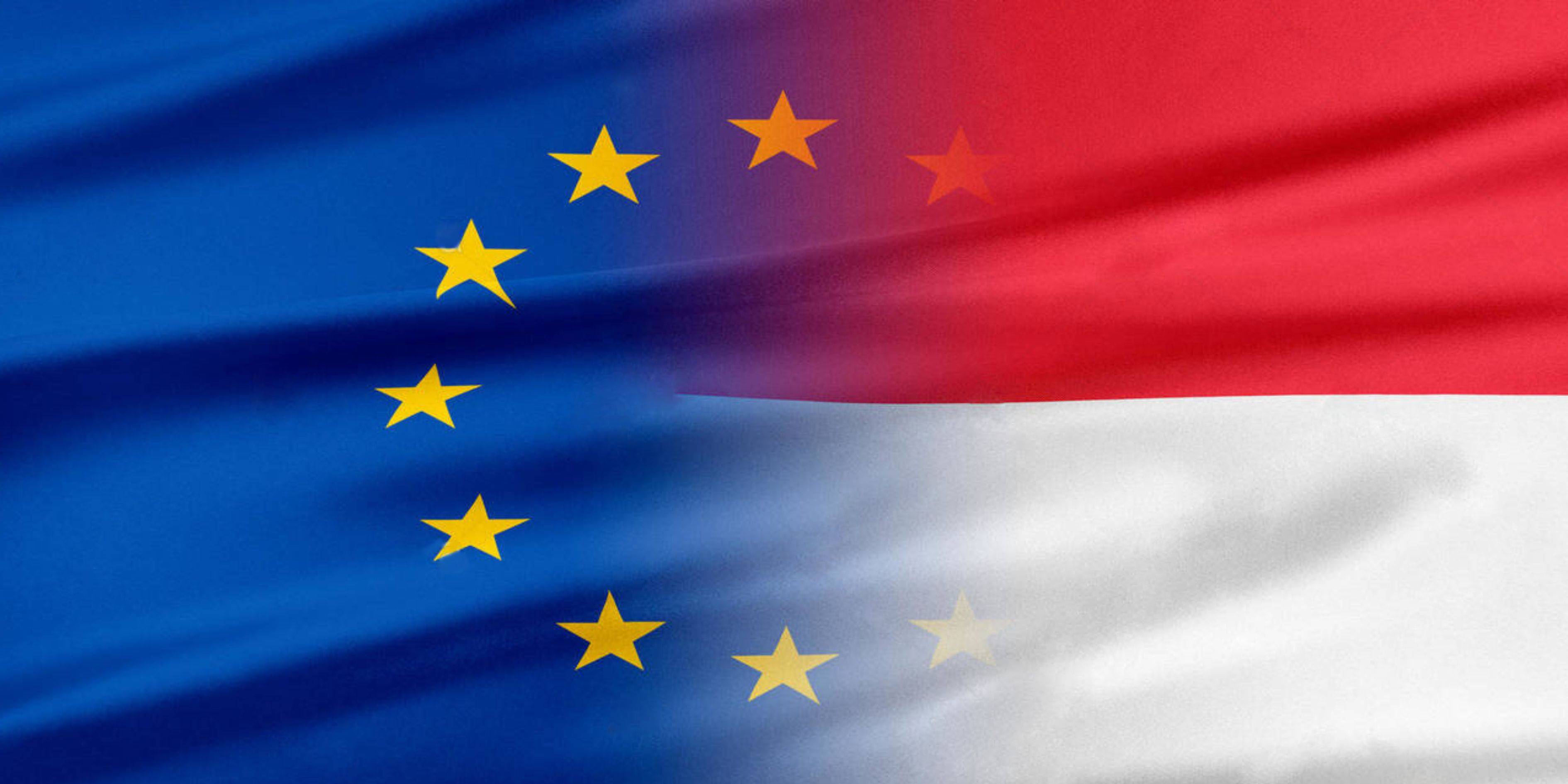
More than a trade agreement focused on reducing import tariffs, IEU-CEPA has the potential to become a catalyst for Indonesia's economic transformation, particularly by promoting higher-value exports, improving industrial productivity, and creating new economic opportunities for businesses and communities.
A Strategic Agreement After a Decade of Negotiations
On 21 November 2026, Indonesia and the European Union officially signed two important agreements:
-
Indonesia–European Union Comprehensive Economic Partnership Agreement (IEU-CEPA), establishing a comprehensive framework for trade and economic cooperation.
-
Investment Protection Agreement (IPA), providing a framework for investment protection and greater certainty for investors on both sides.
IEU-CEPA was signed by Indonesia's Minister of Trade, Budi Santoso, and European Commissioner for Trade, Maroš Šefčovič. The IPA was signed by Indonesia's Coordinating Minister for Economic Affairs, Airlangga Hartarto, together with the European representative. The signing ceremony was witnessed by European Commission President Ursula von der Leyen.
Negotiations began in 2016 and reached their substantive conclusion in September 2025, before the agreements were formally signed in November 2026.
For Indonesia, this agreement is strategically significant. The European Union represents a major global market comprising approximately 450 million consumers across 27 member states.
According to EU data, bilateral trade in goods between Indonesia and the European Union reached almost €29 billion in 2025. During the same year, EU imports from Indonesia amounted to approximately €18.7 billion, while EU exports to Indonesia reached approximately €10.2 billion.
These figures demonstrate an established trade relationship with considerable potential for further expansion.
TGS AU Partner's Insights: Greater Opportunities Require Industrial Transformation"IEU-CEPA should not be viewed merely as a trade agreement that provides Indonesian products with better access to the European market. More importantly, it represents an opportunity for Indonesia to strengthen its position in global supply chains and accelerate the transformation of its domestic industries. Broader market access creates opportunities, but competitive advantage cannot be built through tariff reductions alone. Indonesian businesses need to improve productivity, product quality, technology adoption, and their ability to meet international standards. Equally important is ensuring that the benefits of trade and investment extend throughout the domestic economy. The participation of SMEs, local suppliers, and Indonesian workers should be an integral part of industrial development strategies. Ultimately, the success of IEU-CEPA should not be measured solely by the growth in trade between Indonesia and the European Union, but also by its contribution to building stronger, more productive, and more competitive domestic industries." — Mikail Jaman, Managing Partner |
Broader Market Access: New Opportunities for Indonesian Products
One of the most immediate benefits of IEU-CEPA is improved market access through the reduction and elimination of import tariffs.
According to Indonesia's Ministry of Trade, approximately 90.4% of EU tariff lines applicable to Indonesian products will be reduced to zero upon the agreement's entry into force. A further 7.92% will be eliminated progressively over a period of 3 to 15 years.
Overall, approximately 98.35% of EU tariff lines will receive preferential market access for Indonesian products.
Several industries are expected to benefit:
1. Palm Oil and Its Derivatives
Palm oil and downstream products will have opportunities to improve their competitiveness in the European market through lower tariff barriers. This may also encourage further investment in processed products with higher added value.
2. Textiles, Garments, and Footwear
Indonesia has an established manufacturing base and substantial workforce in the textile and footwear industries. More competitive tariff access could create opportunities for manufacturers to expand their markets, increase production capacity, and attract orders from European buyers.
3. Rubber and Rubber Products
Indonesia has significant potential in natural rubber production and rubber-based manufacturing. Lower tariffs could improve the competitiveness of industrial components and processed rubber products.
4. Fisheries and Processed Food
The European market offers opportunities for Indonesian seafood, processed food, and agribusiness products. However, businesses must meet applicable food safety, traceability, and technical requirements.
5. Furniture and Manufactured Products
Furniture, wood products, and other manufactured goods could gain access to broader markets, particularly for producers capable of maintaining quality, design standards, and sustainability requirements.
Reduced tariffs provide a cost advantage, but they do not automatically guarantee increased exports. Compliance with technical standards, rules of origin, consistent product quality, and logistics efficiency will remain essential determinants of competitiveness.
Investment Opportunities and the Development of Domestic Industries
Beyond trade, IEU-CEPA and the IPA create opportunities to expand investment between Indonesia and the European Union.
For European investors, Indonesia offers a large domestic market, natural resources, an established manufacturing base, and a strategic position within ASEAN.
For Indonesia, European investment could bring capital, technology, expertise, and access to international distribution networks.
Several sectors may attract increased investment interest:
-
Manufacturing and automotive: Development of vehicle components, production technologies, and industrial supply chains.
-
Renewable energy: Investment in solar energy, energy-efficiency technologies, and supporting infrastructure.
-
Electric vehicles and batteries: Development of components, technology, and the broader electric vehicle ecosystem.
-
Electronics and industrial equipment: Expansion of manufacturing capabilities and production technologies.
-
Pharmaceuticals and medical equipment: Development of production facilities, medical technology, and healthcare industry cooperation.
-
Natural resource processing: Expansion of downstream industries and higher value-added products.
The Investment Protection Agreement complements trade cooperation by providing a framework for investment protection. It is expected to strengthen investor confidence and create a more predictable investment environment.
Nevertheless, actual investment decisions will depend on more than international agreements. Domestic regulatory certainty, infrastructure, skilled labour availability, and policy consistency will remain important factors.
Opportunities Extend Beyond Large Corporations
One of the important potential benefits of IEU-CEPA is the opportunity for local businesses and SMEs to participate in international supply chains.
Small and medium-sized enterprises do not necessarily need to export directly to Europe to benefit from the agreement. They can participate as suppliers to exporters, industrial manufacturers, and foreign investors operating in Indonesia.
For example, increased furniture exports may generate demand for local craftsmen, raw material suppliers, component manufacturers, packaging providers, transportation companies, and warehousing operators.
Similarly, the expansion of processed food exports may create opportunities for farmers, raw material producers, food processors, and logistics businesses.
These opportunities can generate multiplier effects throughout regional economies, particularly when large companies actively involve domestic suppliers.
Therefore, the success of IEU-CEPA should not be measured solely by the export performance of large corporations, but also by the extent to which international trade opportunities benefit local businesses.
Potential Impacts on Indonesia's Economy
From a macroeconomic perspective, IEU-CEPA could influence Indonesia's economy through several key channels.
1. Higher Exports and Foreign Exchange Earnings
More competitive market access could stimulate demand for Indonesian products. If accompanied by increased domestic production capacity, this could strengthen export performance and foreign exchange earnings. Higher exports may also support Indonesia's trade balance, although the ultimate impact will depend on import developments and the overall structure of bilateral trade.
2. Increased Investment and Capital Formation
New investments could increase fixed capital formation through factory construction, machinery purchases, production facilities, and supporting infrastructure. Such investments could expand national production capacity and support long-term economic growth.
3. Higher Productivity and Industrial Value Addition
Access to technology, machinery, expertise, and international production practices could encourage Indonesian companies to improve operational efficiency and productivity. This is particularly important for Indonesia's economic transformation from dependence on raw commodity exports towards higher-value manufacturing and industrial processing.
4. Job Creation and Higher Household Incomes
Growth in manufacturing, exports, logistics, and supporting industries could increase demand for labour. The benefits could extend to industrial workers, farmers, fishermen, craftsmen, and communities connected to export supply chains.
5. Export Market Diversification and Economic Resilience
Stronger trade relations with Europe could help Indonesia reduce export market concentration and expand its sources of international demand. This diversification is increasingly important amid global economic uncertainty, changing trade policies, and international supply chain disruptions.
The Indonesian government has also communicated several positive projections. Over a five-year period, IEU-CEPA is projected to increase Indonesia's exports to Europe by nearly 58%, generate approximately USD 2.8 billion in additional economic welfare, and benefit around five million workers in labour-intensive industries.
These figures represent projections based on assumptions and economic modelling, rather than realised economic outcomes.
Meanwhile, the European Commission estimates that Indonesian exports of goods and services to the EU could increase by more than 14% over 15 years. During the same period, EU exports to Indonesia are projected to rise by almost 40%.
The differences between these projections reflect different time horizons, scopes, and modelling methodologies. Both indicate the potential for increased trade activity, although actual outcomes will depend on implementation and business responses.
Challenges: Market Access Must Be Matched by Industrial Readiness
Despite the opportunities, IEU-CEPA will also introduce challenges for domestic industries.
Lower tariffs do not only create opportunities for Indonesian products in Europe. They also improve access for European products entering the Indonesian market.
Machinery, vehicles, chemicals, pharmaceuticals, and various European industrial products could become more competitive in Indonesia.
This may benefit consumers and industries that rely on imported inputs and equipment. However, domestic manufacturers with lower productivity or limited competitiveness could face greater competitive pressure.
Furthermore, the European market maintains demanding requirements relating to product quality, environmental protection, labour rights, and supply chain traceability.
Indonesian companies will need to pay attention to regulations such as the European Union Deforestation Regulation (EUDR), sustainability requirements, product safety standards, and other technical requirements relevant to their industries.
Ultimately, industrial readiness, workforce capabilities, production efficiency, and compliance with international standards will determine how much Indonesia can benefit from the agreement.
Partner's Recommendations: What Should Indonesian Businesses Do?Mikail Jaman, managing partner, delivers following recommendations: To maximise the opportunities created by IEU-CEPA, Indonesian businesses should begin considering several strategic actions. 1. Identify Priority Markets and Products Businesses should evaluate products with potential demand in Europe, their cost structures, competitive positioning, and eligibility for preferential tariffs based on product classification and applicable rules. 2. Improve Production Capacity and Quality Broader market access must be supported by the ability to fulfil orders, maintain consistent quality, and improve operational efficiency. 3. Prepare for International Standards and Compliance Companies should assess applicable rules of origin, product safety requirements, certifications, traceability, environmental standards, and labour regulations, including sustainability aspect relevant to their industries. 4. Develop Partnerships and Supply Chain Relationships Local businesses should explore partnerships with European importers, distributors, investors, and industrial partners. At the same time, larger companies should strengthen their domestic supplier networks. 5. Develop Long-Term Investment and Expansion Strategies Businesses should consider IEU-CEPA as part of their long-term growth strategies, including capacity expansion, market diversification, and the development of higher value-added products. |
IEU-CEPA: A New Momentum for Indonesia's Economic Competitiveness
IEU-CEPA presents opportunities for Indonesia to expand export markets, attract investment, strengthen domestic industries, and increase participation in global supply chains.
However, economic benefits will not materialise automatically simply because the agreement has been signed. They require business readiness, consistent government policies, stronger human capital, and the development of domestic industrial capabilities.
Indonesia has an opportunity to use its stronger economic relationship with the European Union as a catalyst for building a more productive, diversified, and higher value-added economy.
The challenge ahead is not simply how Indonesia can gain access to the European market, but how the country can transform that access into sustainable economic competitiveness.
Disclaimer: This article has been prepared for general informational purposes only and does not constitute advice tailored to the circumstances of any particular parties. The application of these provisions should take into account the relevant facts, party status, transitional provisions, and applicable implementing regulations.
Key references:
-
Ministry of Trade of the Republic of Indonesia, 21 November 2026.
-
Coordinating Ministry for Economic Affairs of the Republic of Indonesia, 21 November 2026.
-
European Commission, EU–Indonesia CEPA Factsheets, November 2026.
-
Council of the European Union, EU–Indonesia Trade and Investment Agreements, November 2026.
News & Articles Recommendations.