Business Outlook 2027 – Accounting & Tax Update: Key Regulatory Changes
Changes in tax regulations can affect how companies recognize expenses, calculate their tax liabilities, and determine which tax facilities they are eligible to utilize. Through Government Regulation No. 20 of 2026, which amends Government Regulation No. 55 of 2022, the government has introduced several adjustments to the Income Tax (PPh) framework that taxpayers need to take into consideration.
Effective April 22, 2026, the regulation covers several important aspects, including the clarification of expenses that are non-deductible for tax purposes, changes to the eligibility criteria for the 0.5% Final Income Tax scheme, and provisions governing gross turnover calculations and the transitional use of the facility.
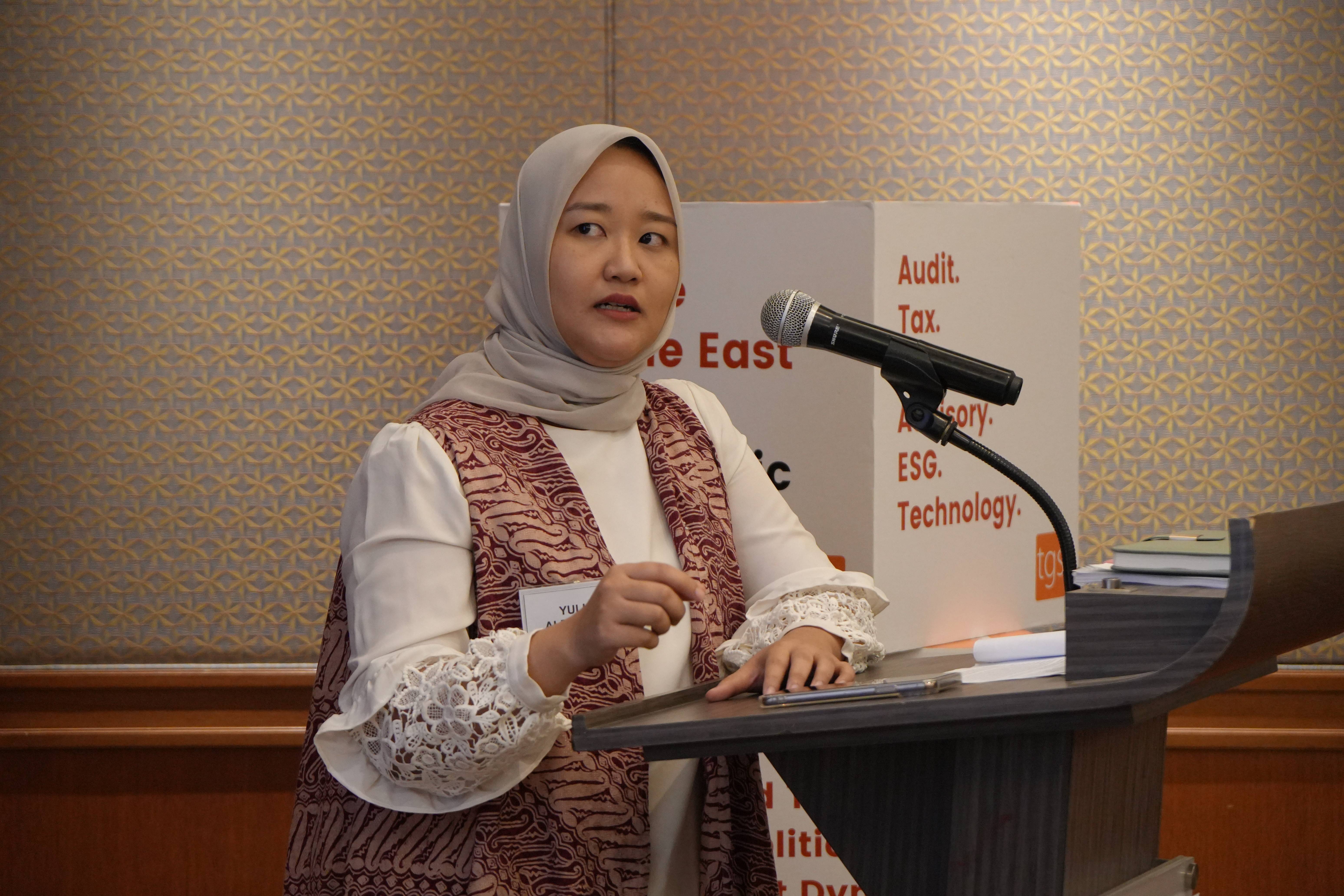
Through this Tax Alert, KAP Agus Ubaidillah dan Rekan (TGS AU Partners) outlines the key provisions of Government Regulation No. 20 of 2026 and their implications for businesses, providing a reference for companies to evaluate their tax compliance and obligations.
1. Bribery and Gratuity Expenses Explicitly Classified as Non-Deductible
Legal basis: Article 20A of Government Regulation No. 55 of 2022, as introduced by Government Regulation No. 20 of 2026.
Government Regulation No. 20 of 2026 explicitly stipulates that expenses in the form of bribes, gratuities, and/or other forms of payments, regardless of their name or form, that fall under the provisions of laws and regulations concerning corruption and/or bribery offenses, cannot be deducted from gross income. This provision also covers payments made to foreign public officials.
This provision clarifies the tax treatment of expenses associated with bribery and corrupt practices. Accordingly, such expenses cannot be recognized as tax-deductible expenses to reduce taxable income.
Implications for businesses
Companies need to distinguish between expense recognition under accounting standards and expense recognition for tax purposes. An expense recorded in the income statement is not automatically deductible when calculating taxable income.
For example, if a company records an expense of IDR 100 million that, upon review, is determined to fall within the category of bribery payments as stipulated under the relevant provisions, the expense cannot be deducted from gross income for tax purposes.
During the fiscal reconciliation process, the expense must be treated as a positive fiscal adjustment so that it does not reduce taxable income. The resulting tax impact will depend on the company's overall tax position, including its taxable income and applicable tax rate.
Recommended actions:
-
Review expenditure policies, gifts, commissions, and payments to third parties based on the substance of each transaction.
-
Ensure that transaction approval and documentation procedures are properly implemented.
-
Identify expenses that require further assessment during fiscal reconciliation.
-
Strengthen anti-bribery and anti-gratuity policies, as well as the company's internal control framework.
It is important to note that not all gifts, commissions, or representation expenses automatically fall within the prohibited categories. Each transaction must be assessed based on its substance and the relevant legal provisions.
2. Changes to the Eligibility Criteria for the 0.5% Final Income Tax Scheme
The legal basis for this provision is Articles 56 and 57 of Government Regulation No. 55 of 2022, as amended by Government Regulation No. 20 of 2026. The 0.5% Final Income Tax rate remains unchanged. However, Government Regulation No. 20 of 2026 revises the scope of taxpayers eligible to utilize the scheme.
Under the revised Article 57, domestic taxpayers eligible for this facility include:
-
Individual taxpayers.
-
Corporate taxpayers in the form of individually established limited liability companies (perseroan perorangan).
-
Cooperative taxpayers.
These taxpayers must meet the gross turnover threshold of no more than IDR 4.8 billion in a Tax Year, along with other applicable requirements under the regulation.
This change is significant because not all business entities that were previously eligible to utilize the Final Income Tax scheme under the previous provisions are included in the revised eligibility criteria.
What about CVs, firms, and regular limited liability companies (PTs)?
Government Regulation No. 20 of 2026 provides transitional provisions for limited partnerships (CVs), firms, limited liability companies (PTs) other than individually established limited liability companies, and village-owned enterprises (BUMDes) or joint village-owned enterprises (BUMDes Bersama) that previously utilized the Final Income Tax scheme and have not yet exhausted their applicable facility period.
Provided that they meet the transitional requirements and other applicable conditions, these taxpayers may continue utilizing the Final Income Tax scheme until the end of their previously applicable facility period.
Therefore, businesses should not immediately conclude that their eligibility for the facility ends upon the issuance of Government Regulation No. 20 of 2026. Their taxpayer status, registration year, history of facility utilization, and remaining facility period must first be reviewed.
Implications for businesses
Companies that have been utilizing the 0.5% Final Income Tax scheme need to reassess their eligibility for the 2026 Tax Year and subsequent years.
For business entities that are no longer eligible to use the Final Income Tax scheme, preparations should be made to apply the general Income Tax provisions, including the implementation of proper bookkeeping and taxable income calculations.
3. The 0.5% Final Income Tax Scheme Does Not Apply to All Types of Income
Government Regulation No. 20 of 2026 continues to exclude certain types of income from the scope of the Final Income Tax scheme on gross turnover. The excluded income includes:
-
Income earned by individuals from independent personal services.
-
Foreign-sourced income on which tax is payable or has been paid overseas.
-
Income that is already subject to Final Income Tax under separate tax provisions.
-
Income that is excluded from taxable income under applicable regulations.
The provisions concerning independent personal services cover various professions, including accountants, lawyers, doctors, architects, consultants, notaries, appraisers, actuaries, and other professions specified in the regulation.
For example, a consultant who independently provides professional services under their own name is not automatically eligible to apply the 0.5% Final Income Tax rate to their professional service income simply because their gross turnover is below IDR 4.8 billion.
The explanatory provisions of Government Regulation No. 20 of 2026 also distinguish between professional services performed by individuals and businesses operated through commercial activities, such as a training or tutoring business that employs other individuals.
The applicable tax treatment must be determined based on the nature of the activities and the relevant provisions.
Therefore, eligibility cannot be assessed solely based on gross turnover. Taxpayers and businesses must also evaluate the nature of their income and the characteristics of their business activities.
4. Gross Turnover Calculations and Multiple Entity Ownership Require Attention
The legal basis for these provisions is set out in Articles 57 and 58 of Government Regulation No. 55 of 2022, as amended by Government Regulation No. 20 of 2026.
Government Regulation No. 20 of 2026 also provides further clarification on gross turnover calculations for determining eligibility to utilize the Final Income Tax scheme.
Gross turnover taken into account includes income from business activities and independent personal services earned during the year preceding the relevant Tax Year, whether subject to Final Income Tax or non-final Income Tax, including foreign-sourced income. The calculation must also be made before deducting sales discounts, cash discounts, or similar reductions.
In addition, specific provisions govern the aggregation of gross turnover under certain circumstances, including the following:
a. Individuals Establishing Multiple Individually Owned Limited Liability Companies
Where an individual establishes multiple individually owned limited liability companies (perseroan perorangan), the individual's income and the income of all limited liability companies established by that individual must be taken into account in accordance with the applicable gross turnover aggregation provisions.
If the combined gross turnover exceeds IDR 4.8 billion in a Tax Year, the taxpayers covered by these provisions will no longer be eligible to utilize the Final Income Tax scheme under this regulation for the following Tax Year.
b. Married Couples Under Certain Tax Arrangements
For married couples who have entered into a written agreement to separate their assets and income, or where the wife elects to exercise her own tax rights and obligations separately, the gross turnover of the husband and wife must be aggregated in accordance with the applicable provisions.
Under the circumstances specified in the regulation, the calculation also includes individually owned limited liability companies established by the husband and wife.
Illustrative Example
An individual taxpayer has business gross turnover of IDR 2 billion. The taxpayer also establishes two individually owned limited liability companies, each generating gross turnover of IDR 1.5 billion and IDR 1.8 billion, respectively. The combined gross turnover amounts to IDR 5.3 billion.
If all the income and entities fall within the applicable gross turnover aggregation provisions, the combined amount exceeds the IDR 4.8 billion threshold. Consequently, the Final Income Tax facility cannot be utilized for the following Tax Year, in accordance with the relevant provisions.
This example applies only where the ownership structure and taxpayer circumstances meet the aggregation criteria stipulated in the regulation.
Implications for businesses
Businesses with structures involving multiple individually owned limited liability companies or family-owned enterprises need to reassess their gross turnover calculations, ownership relationships, and tax status.
Establishing multiple entities does not automatically mean that each entity is independently eligible to utilize the Final Income Tax facility.
5. Transitional Provisions: What Should Taxpayers Consider for the 2026 Tax Year?
Government Regulation No. 20 of 2026 includes transitional provisions governing the continued utilization of the Final Income Tax facility by certain taxpayers.
Several important considerations include:
-
Individual taxpayers whose Final Income Tax utilization period expired in the 2024 Tax Year may continue utilizing the facility for the 2025 and 2026 Tax Years, provided that they meet the applicable requirements.
-
Individual taxpayers and individually established limited liability companies whose facility period expired in the 2025 Tax Year may continue utilizing the facility for the 2026 Tax Year, provided that they meet the applicable requirements.
-
Certain cooperatives registered before Government Regulation No. 20 of 2026 came into effect may qualify for the continuation of the facility in accordance with the transitional provisions.
-
CVs, firms, limited liability companies other than individually established limited liability companies, and village-owned enterprises or joint village-owned enterprises that still have an unexpired facility period under the previous provisions may continue utilizing the facility until the end of that period, provided that they meet the applicable requirements.
Accordingly, companies need to review their registration dates, years of facility utilization, taxpayer status, and remaining facility periods before determining the appropriate tax treatment for the 2026 Tax Year and subsequent years.
6. Company Evaluation Checklist
To anticipate the implementation of Government Regulation No. 20 of 2026, companies may consider taking the following steps:
1. Evaluate Final Income Tax Eligibility
Ensure that the taxpayer's legal form and business activities meet the applicable requirements. For taxpayers utilizing the facility under the previous regulations, review the transitional provisions and the remaining facility period.
2. Conduct Fiscal Reconciliation
Identify expenses that are non-deductible for tax purposes and ensure that the appropriate fiscal adjustments are made.
3. Review Gross Turnover
Review income from business activities, independent personal services, and other relevant income. For certain business structures, assess whether gross turnover aggregation is required.
4. Strengthen Bookkeeping and Documentation
Ensure that transactions are supported by adequate documentation, account classifications reflect the substance of each transaction, and reconciliations between financial statements and tax calculations are performed consistently.
5. Prepare for a Transition to a Different Tax Scheme, Where Necessary
If a company no longer meets the requirements for the Final Income Tax facility, prepare the necessary bookkeeping, tax calculations, and administrative processes in accordance with the applicable general tax provisions.
Conclusion
Government Regulation No. 20 of 2026 introduces several adjustments that taxpayers need to consider, particularly in determining which expenses are deductible for tax purposes and whether they remain eligible to utilize the 0.5% Final Income Tax scheme.
For companies that have been utilizing the Final Income Tax facility, evaluating taxpayer status and transitional provisions is essential to avoid errors in determining the applicable tax treatment. Meanwhile, businesses with specific ownership structures or business activities need to reassess their gross turnover calculations in accordance with the applicable provisions.
Tax compliance involves more than simply paying taxes. It also requires accurately determining the applicable tax scheme, calculating the tax base, and maintaining proper transaction documentation.
If your company requires an assessment of how Government Regulation No. 20 of 2026 may affect its business operations, the team at KAP Agus Ubaidillah dan Rekan – TGS AU Partners is ready to assist with accounting and tax evaluations based on your company's specific requirements.
Official References:
-
Government Regulation No. 20 of 2026 concerning Amendments to Government Regulation No. 55 of 2022.
-
Directorate General of Taxes (DJP), Government Regulation No. 20 of 2026 and its explanatory provisions: https://www.pajak.go.id/id/peraturan/perubahan-atas-peraturan-pemerintah-nomor-55-tahun-2022-tentang-penyesuaian-pengaturan-di
Disclaimer: This Tax Alert has been prepared for general informational purposes only and does not constitute tax advice tailored to the circumstances of any particular taxpayer. The application of these provisions should take into account the relevant facts, taxpayer status, transitional provisions, and applicable implementing regulations.
News & Articles Recommendations.